
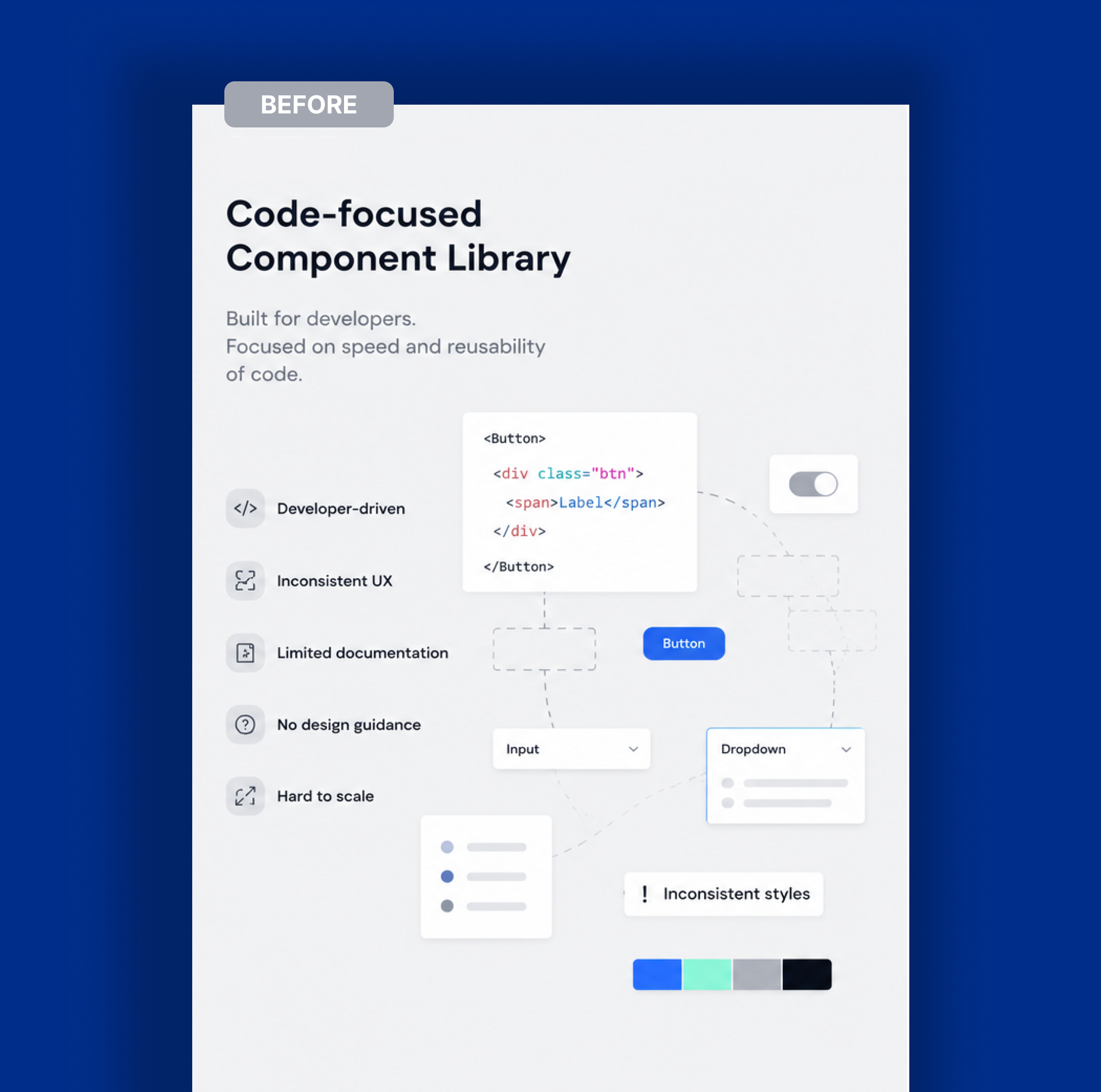
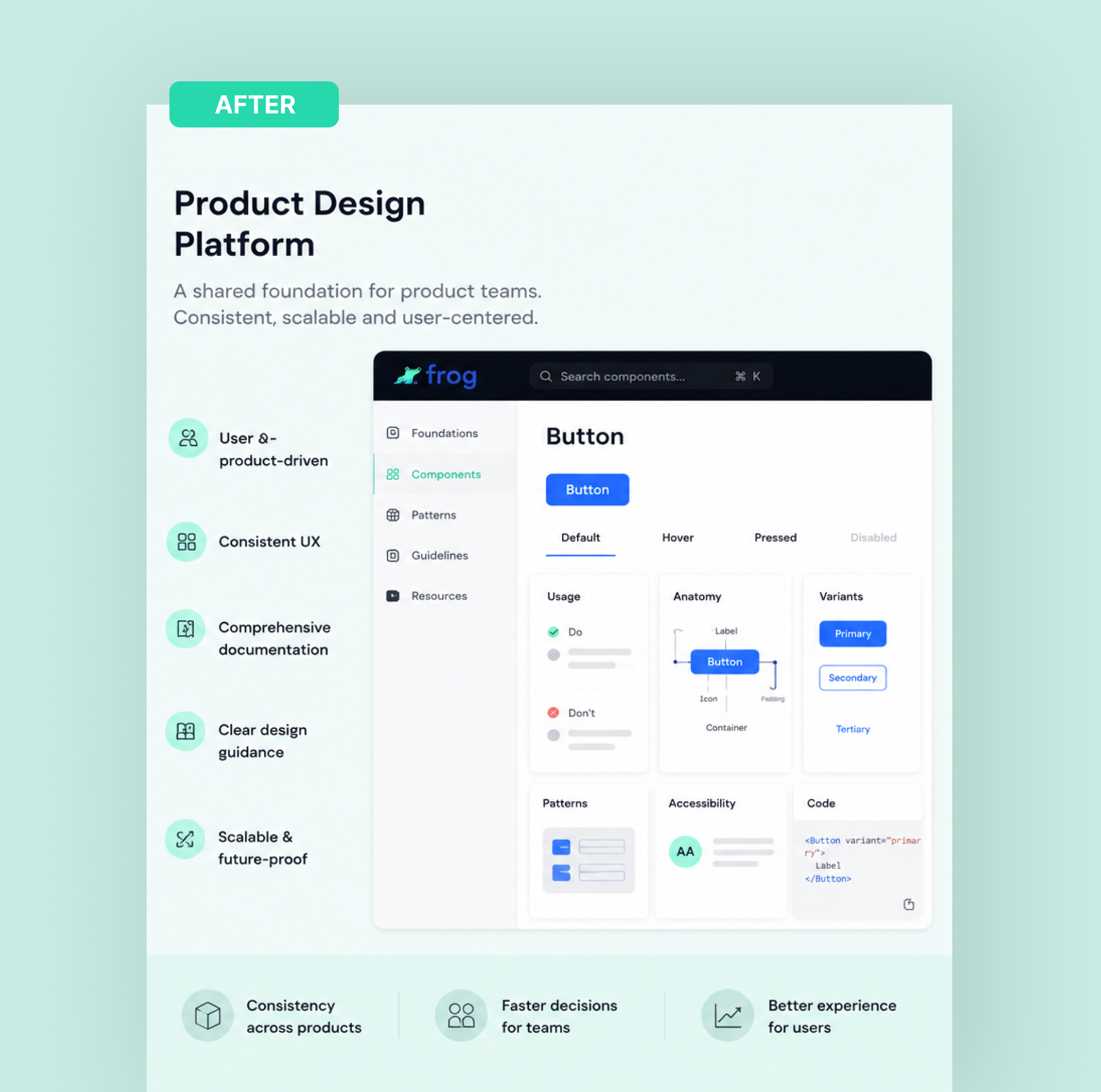
When I joined Adverity, the existing Design System was primarily a front-end development asset. Its main purpose was to accelerate implementation and ensure code reuse across products. While technically robust, the system lacked several critical elements required to support product design at scale:
As the platform grew, maintaining a coherent user experience became increasingly difficult.
I approached the Design System as a product rather than a component library. The work focused on three parallel streams:
Reviewing and improving the usability, accessibility and interaction behavior of existing components.
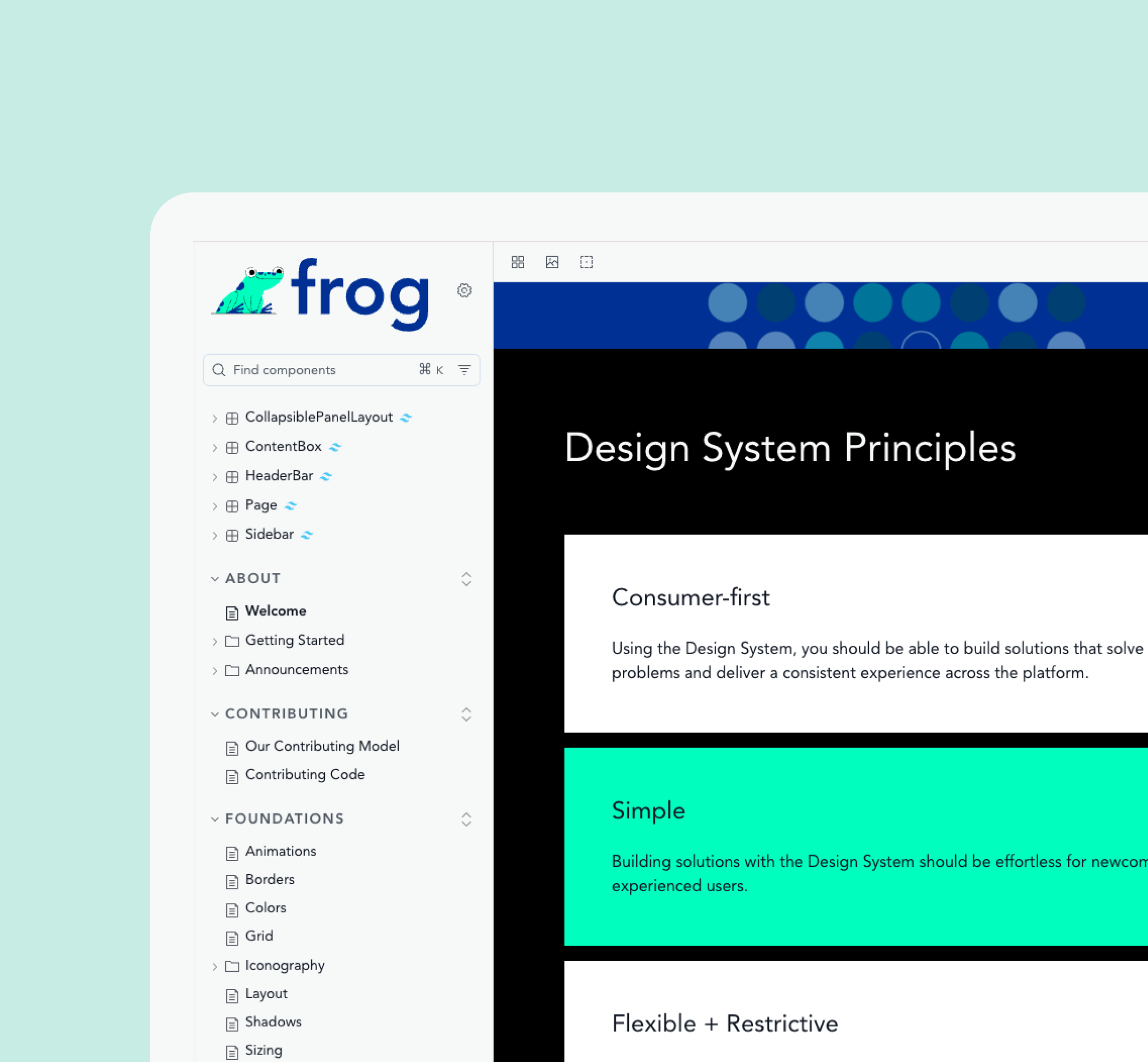
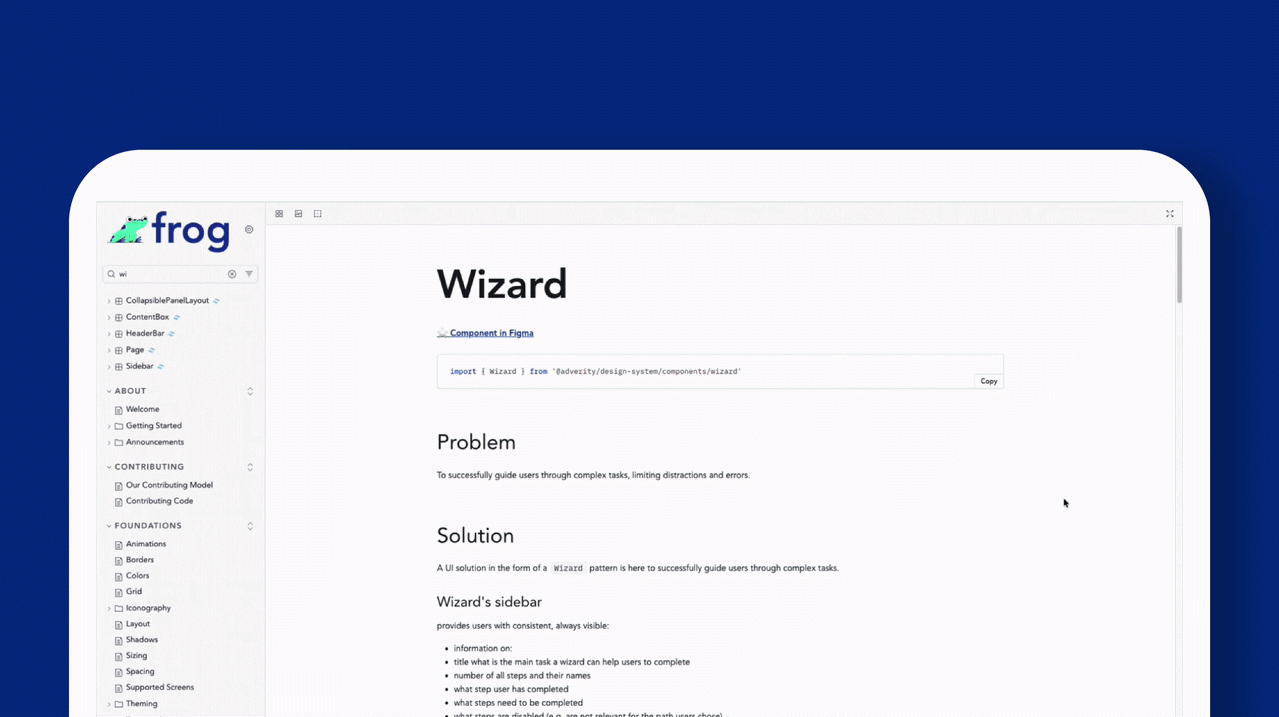
Creating comprehensive component documentation, usage guidelines and decision frameworks to support designers and developers.
Designing new components, composition patterns and visual foundations to support increasingly complex product experiences.
The Design System evolved from a developer-centric implementation framework into a shared product foundation used by designers, engineers and product teams.
Key initiatives included:
The result was a more cohesive and scalable experience across the platform while maintaining development efficiency.
Adverity GmbH
2021-2023
VP Experience