
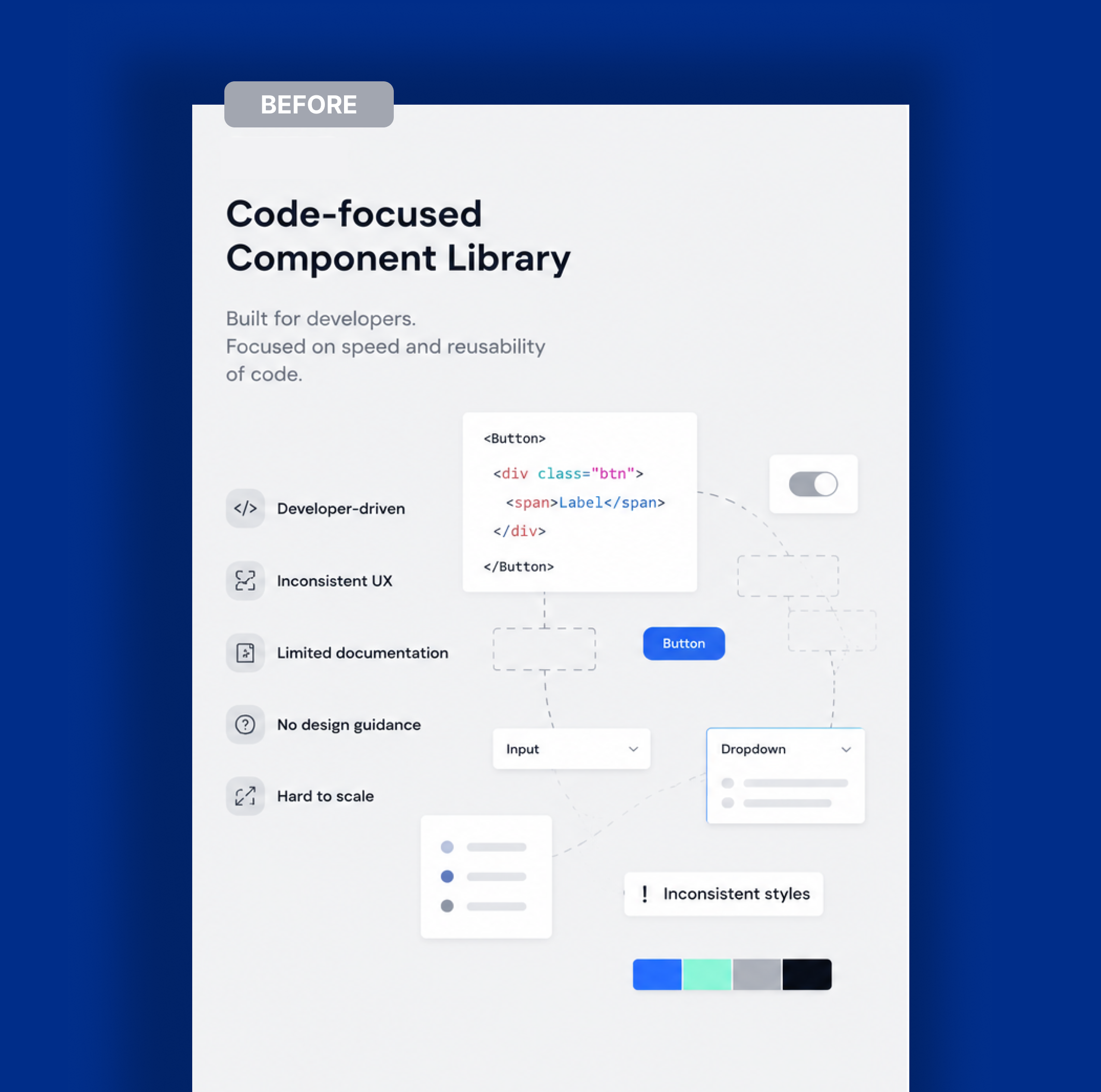
When I joined Adverity, the existing Design System was primarily optimised to help developers build interfaces quickly and consistently. The components were technically robust and reusable, but the system lacked a strong product-design perspective on how they should behave and work together in real user contexts.
Three challenges stood out:
1. Micro-interactions prioritised implementation efficiency over usability
Some interaction patterns were optimised for clean, reusable implementation rather than established usability principles. For example, table rows were not clickable as a whole. Users had to target specific attributes within a row to select it, creating unnecessary interaction friction.
2. Components were not always designed for their product context
Components worked well in isolation but could create awkward experiences when used within complex workflows. For example, clickable cards inside a wizard required an additional confirmation step because the wizard also had a mandatory “Next” action that could not be removed. The individual components worked as designed, but their combination created a confusing interaction model.
3. The system lacked guidance on how components should be used and combined
The Design System provided reusable building blocks, but offered limited guidance around usage, composition and higher-level interaction patterns. Designers often had to make these decisions themselves, leading to different solutions to similar product problems across the platform.
This highlighted a broader issue: the Design System defined how components were built, but not sufficiently how they should be used within the product.
The challenge was therefore to introduce the missing product-design layer — connecting components, interaction patterns and product context to create more coherent and usable experiences.
I approached the transformation by treating the Design System as a product design platform rather than a component library. Together with the team, we worked to introduce the missing product-design layer while preserving the technical foundation that already worked well for developers.
The work focused on three interconnected areas:
1. Bringing UX quality into the system
Together with the team, I worked on reviewing existing components from a user and product perspective, challenging interaction patterns that were technically efficient but created unnecessary friction. We focused on improving usability and interaction behaviour based on established UX principles and real product use cases.
2. Designing for composition and context
We shifted the focus from individual components to how they work together within real product experiences. I worked with the team to identify recurring patterns across complex workflows and develop solutions that considered the broader interaction context rather than treating each component in isolation.
3. Defining how the system should be used
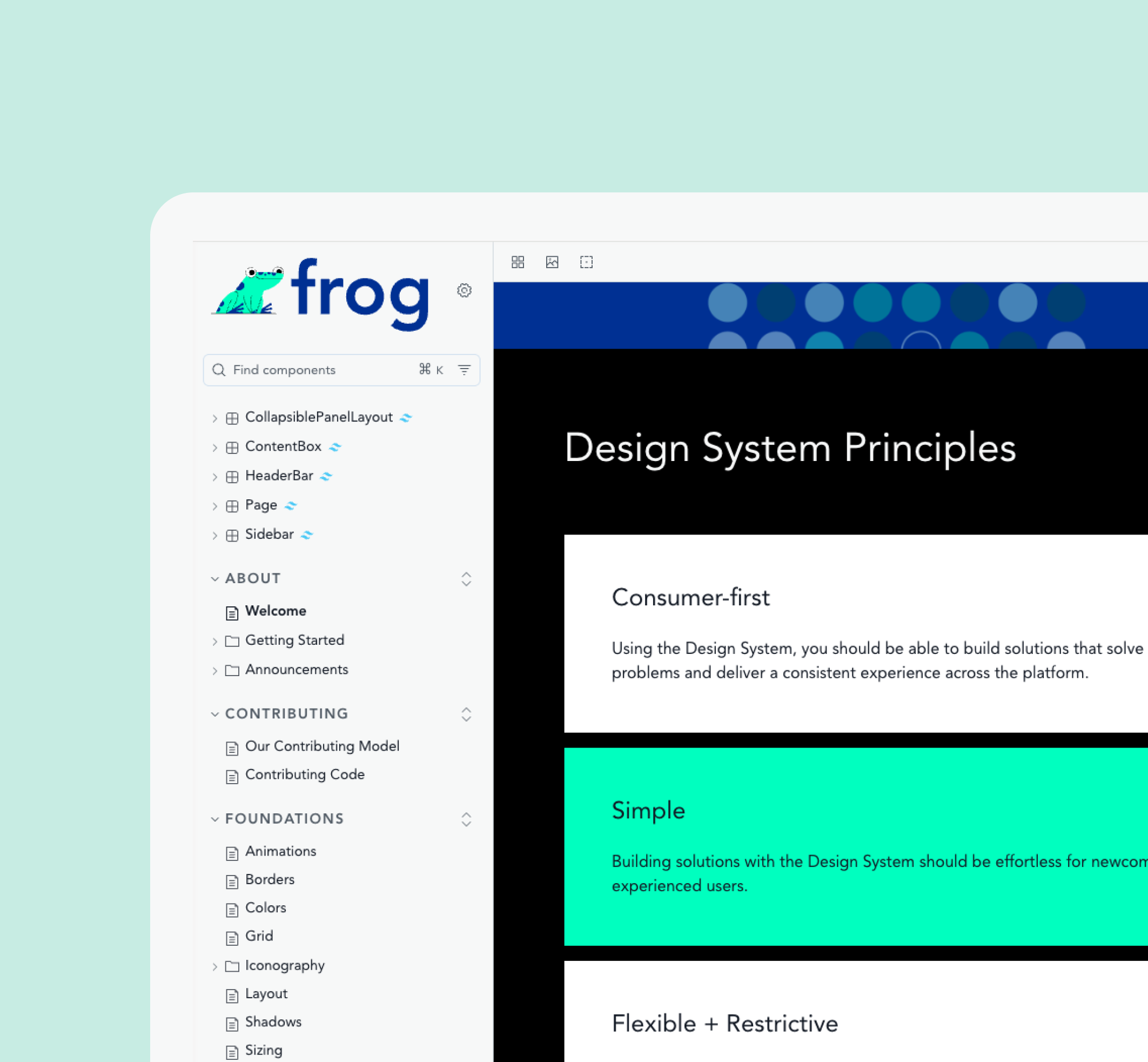
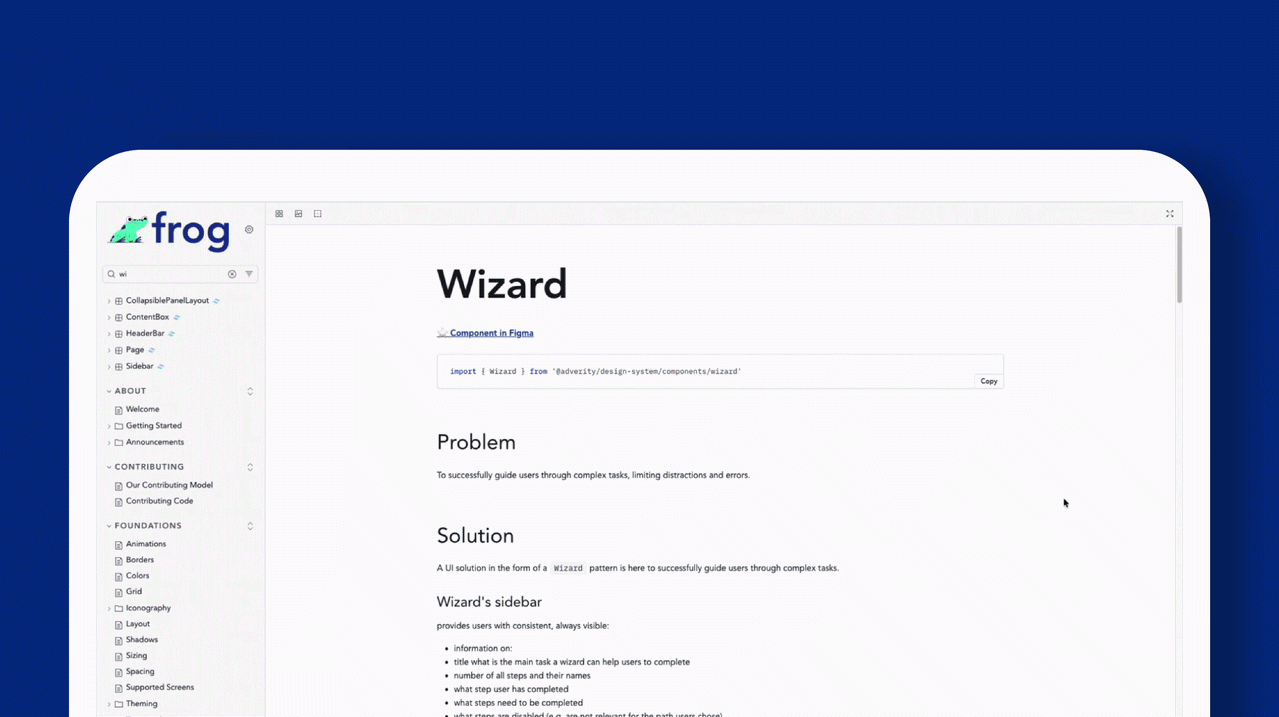
Together, we established clearer usage guidance, design principles and documentation to help designers and engineers make more consistent decisions. The aim was not to prescribe every solution, but to give teams a shared framework for understanding when and how components and patterns should be used.
This collaborative approach allowed us to evolve the Design System without losing its original strength as a development foundation — while extending its role to support better product decisions, not just faster implementation.
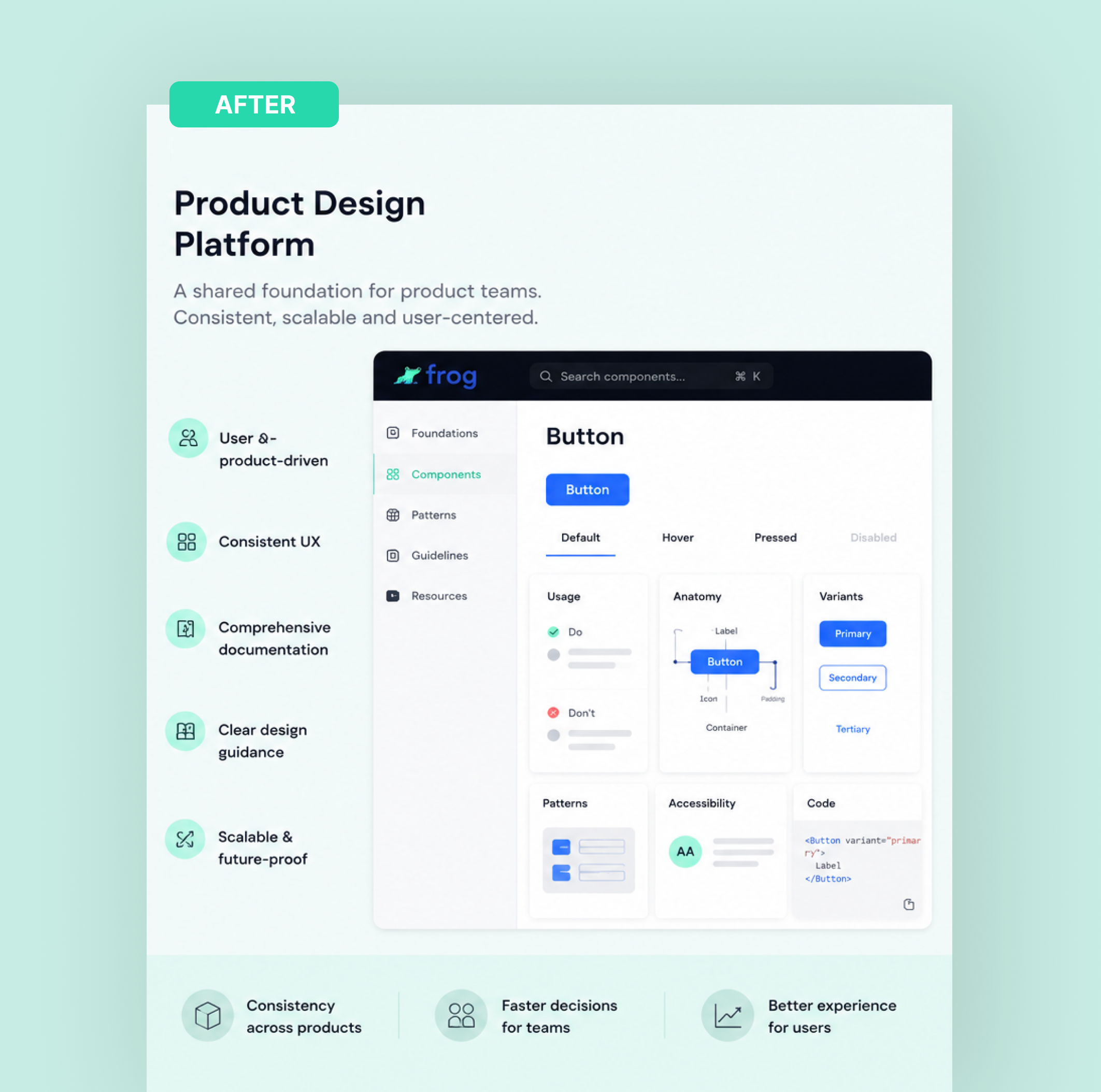
Together with the team, we evolved the Design System from a developer-focused component library into a shared product design platform.
Key initiatives included:
The result was a Design System that supported not only how interfaces were built, but how product experiences were designed.
It became a shared foundation for making consistent design decisions across a complex SaaS platform — helping teams move from reusable components to reusable ways of solving product problems.
Adverity GmbH
2021-2023
VP User Experience