
As Adverity grew, we were collecting an increasing amount of product data, but we lacked a clear way to turn it into product knowledge.
User events, product usage, customer information and operational data existed across different sources, but there was no shared understanding of what we should measure, why it mattered, or how the signals could inform product decisions.
This created several problems:
The problem was therefore not a lack of data. It was the absence of a Product Analytics capability that could turn data into a reliable input for product strategy and decision-making.
I secured budget and established Adverity’s first centralized Product Analytics capability, initially hiring a dedicated Product Analyst.
We focused on three things:
Create the capability
Establish clear ownership and bring dedicated Product Analytics expertise into the organisation.
Create a reliable data foundation
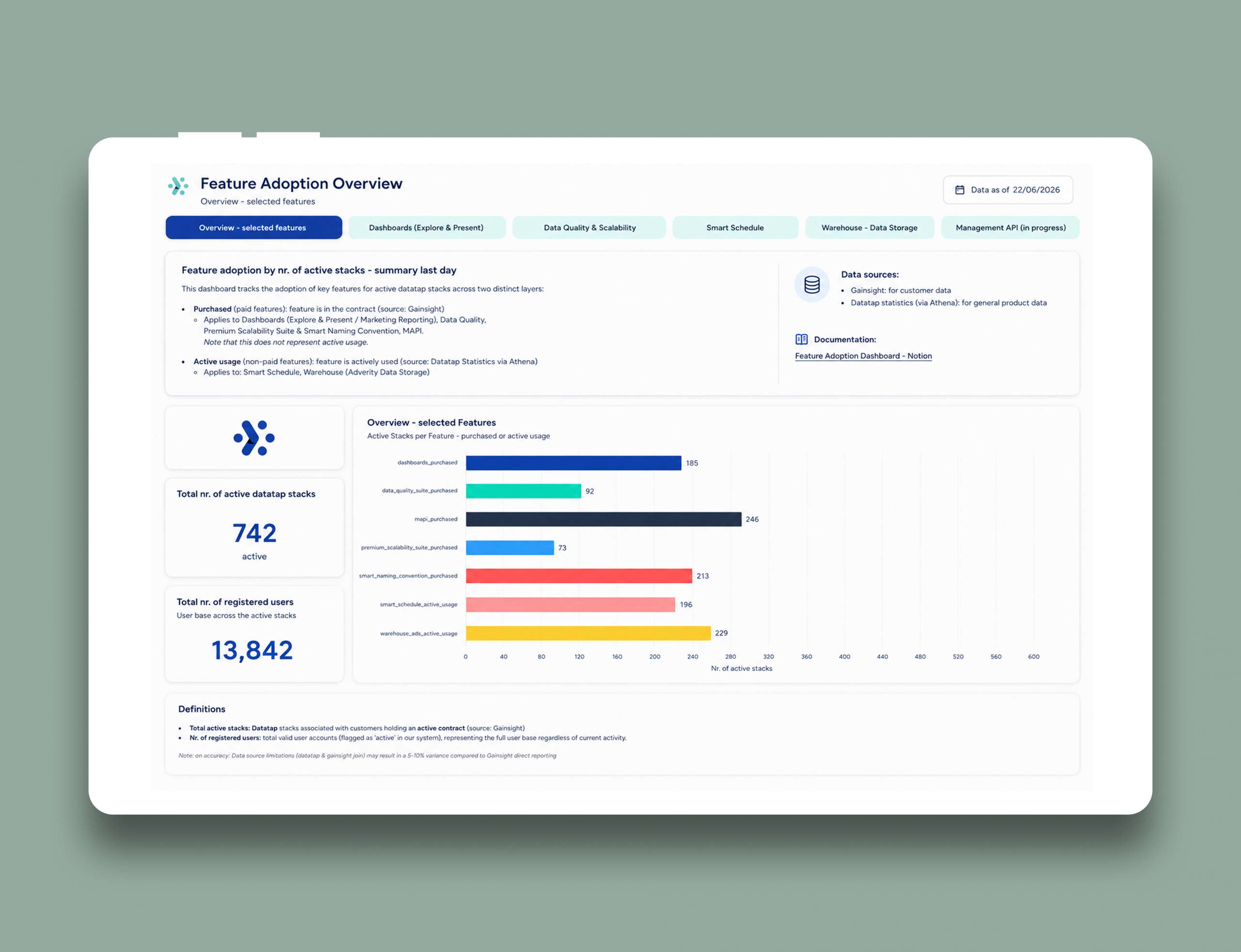
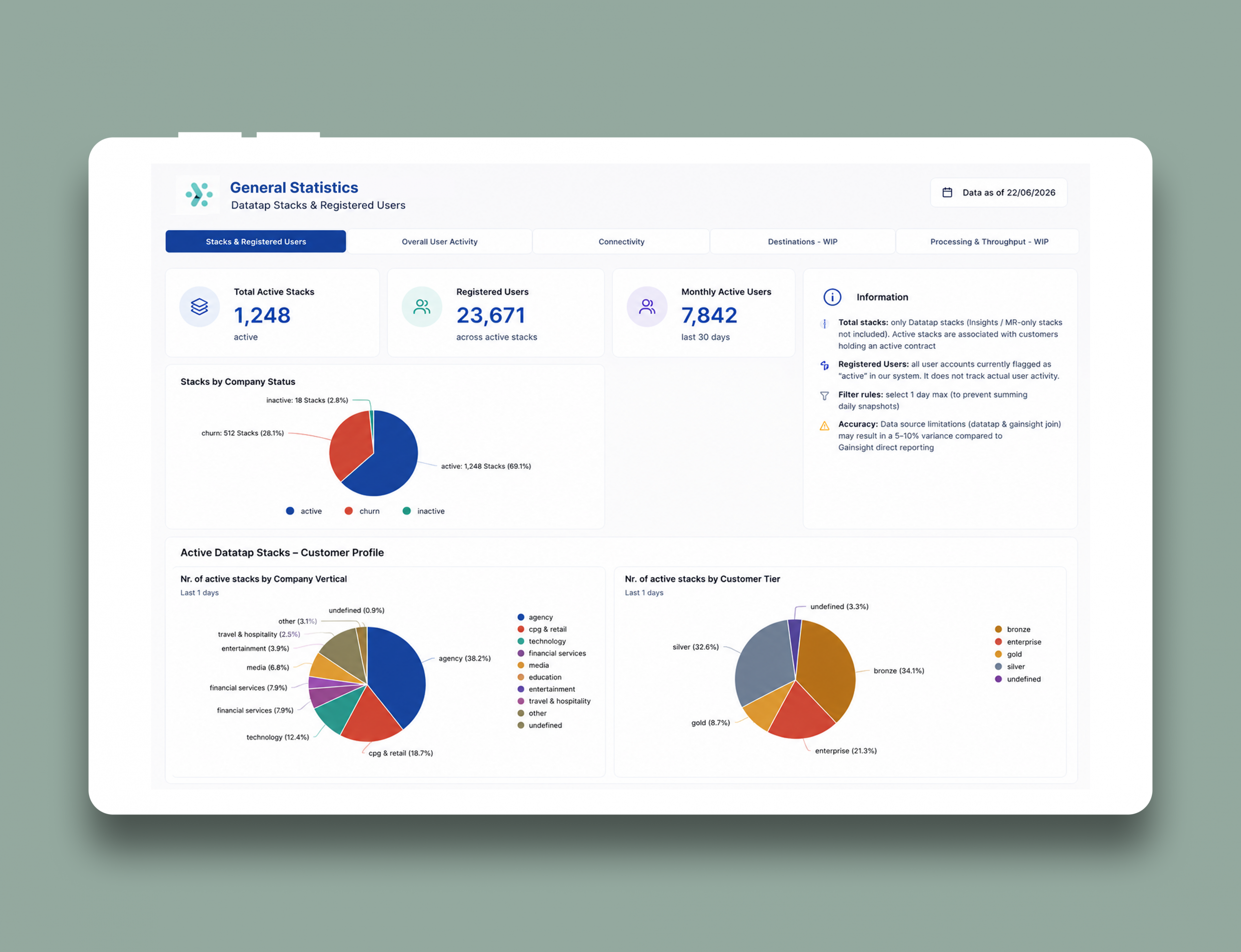
Connect behavioural, customer and product data and improve the way relevant events and metrics were defined and tracked.
Make data actionable
Move beyond dashboards and individual numbers towards metrics that help teams understand user behaviour, identify friction, evaluate product decisions and measure outcomes.
In details, together, we:
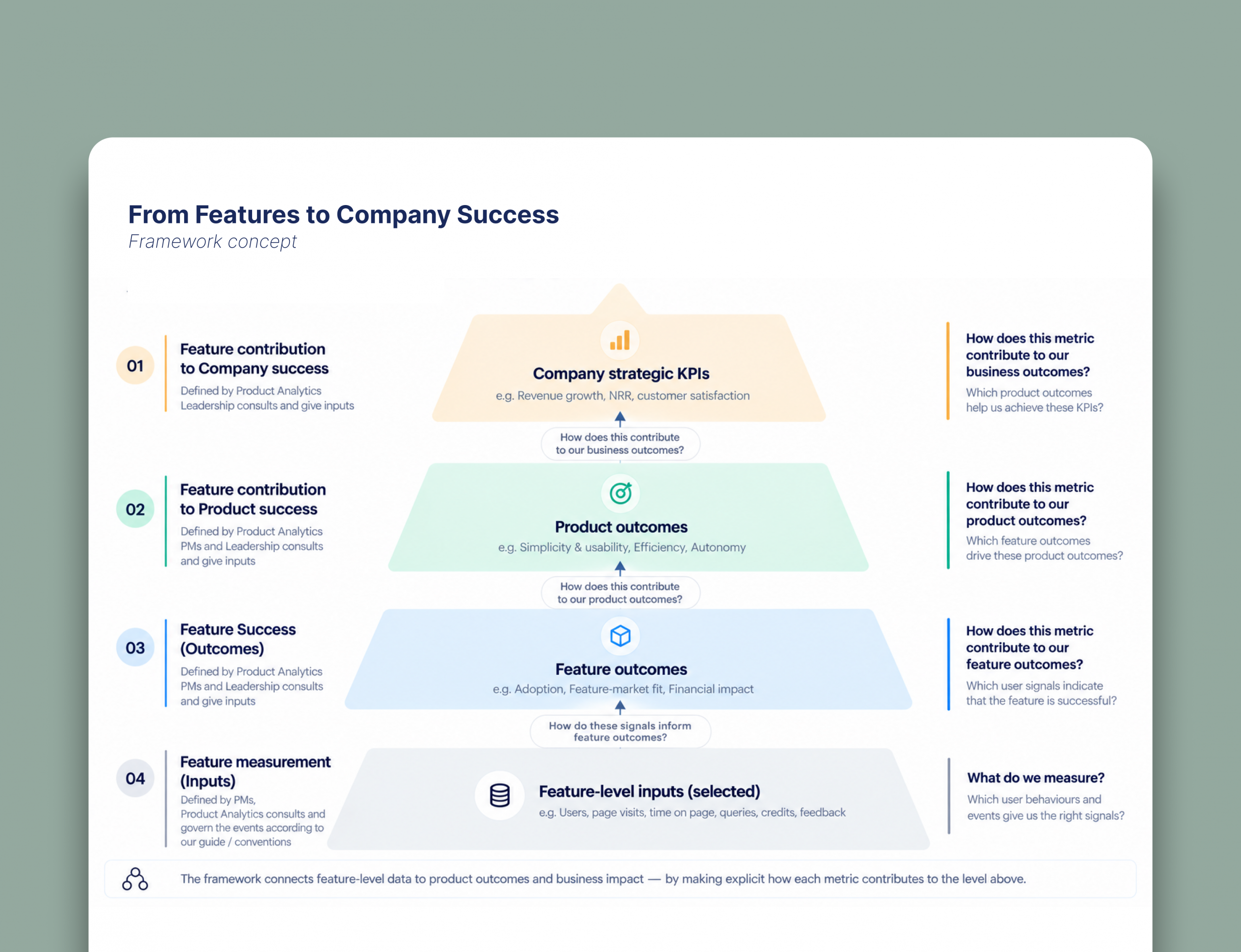
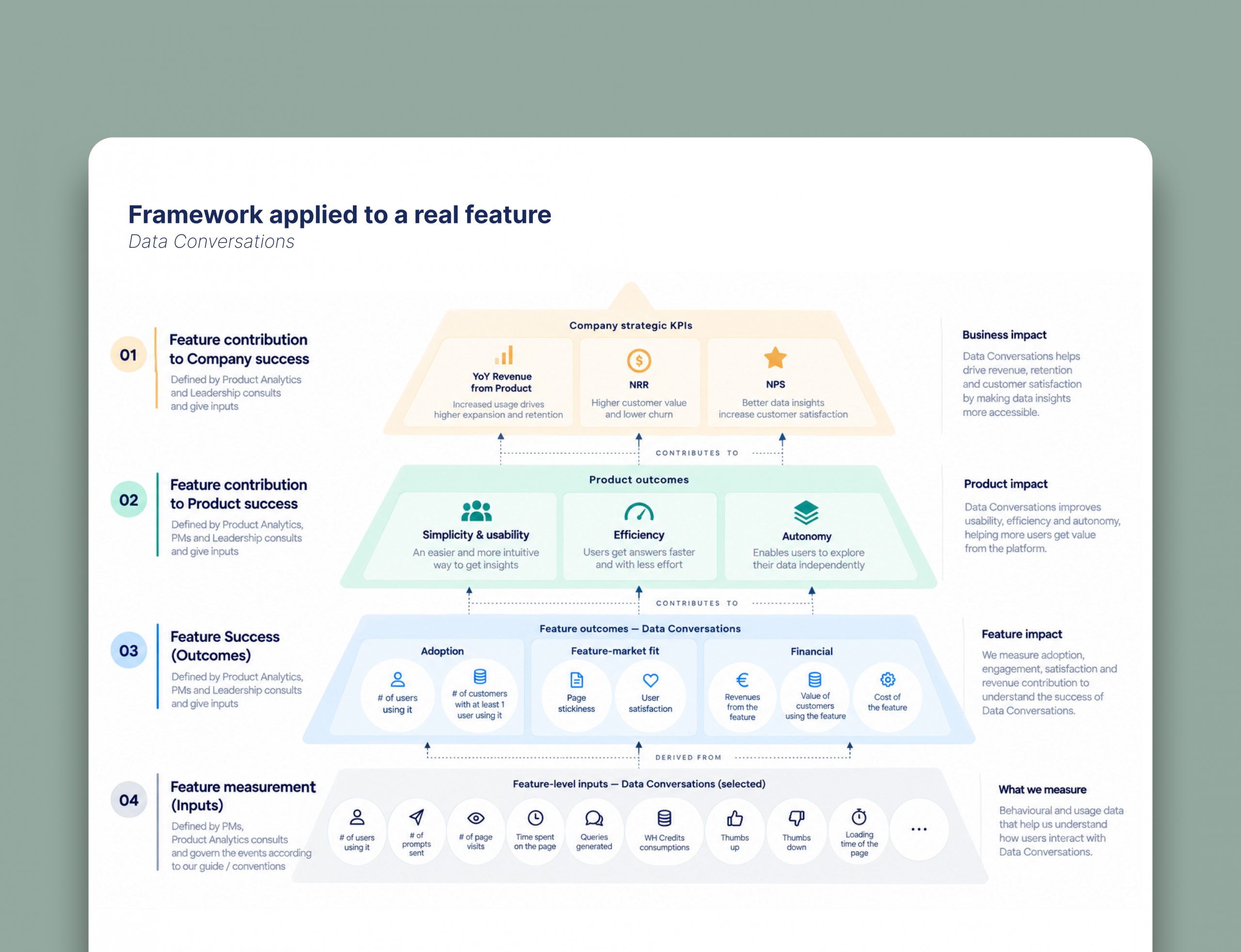
We worked with Product Analytics, Product Management and Leadership to define product success at different levels, starting from the outcomes the company wanted to achieve and progressively translating them into measurable product and feature outcomes.
We structured the framework across four levels:
Company success → Product success → Feature success → Feature measurement
At each level, we asked the same question:
How does this metric contribute to the level above?
This allowed us to move from isolated usage metrics towards a structured measurement system linking behavioural signals to feature outcomes, product value and strategic business outcomes.
The framework also established clearer ownership and governance around which metrics should be defined, tracked and maintained by Product Analytics and how PMs and Leadership contribute to their definition.
Product Analytics evolved from a collection of disconnected data sources into a shared product capability, giving Product, Design and leadership a common foundation for understanding product performance and making more data-informed decisions.
Adverity GmbH
2025
VP User Experience