
When I joined Adverity in 2020, the product had evolved largely through engineering-led implementation, with no established UX function or coherent experience strategy. Together with my team, I established the foundations of a user-centred design practice and progressively transformed the platform’s usability, information architecture, interaction patterns and visual language.
The work combined heuristic evaluation, usability analysis and continuous design iteration with the evolution of the Design System, UX principles, processes and governance. We simplified navigation around users’ actual workflows, introduced meaningful interaction patterns, strengthened product language and, following the 2023 rebrand, led a complete visual redesign of the platform.
The result was a more coherent, understandable and mature product experience, supported by an increasingly structured UX practice and design framework.
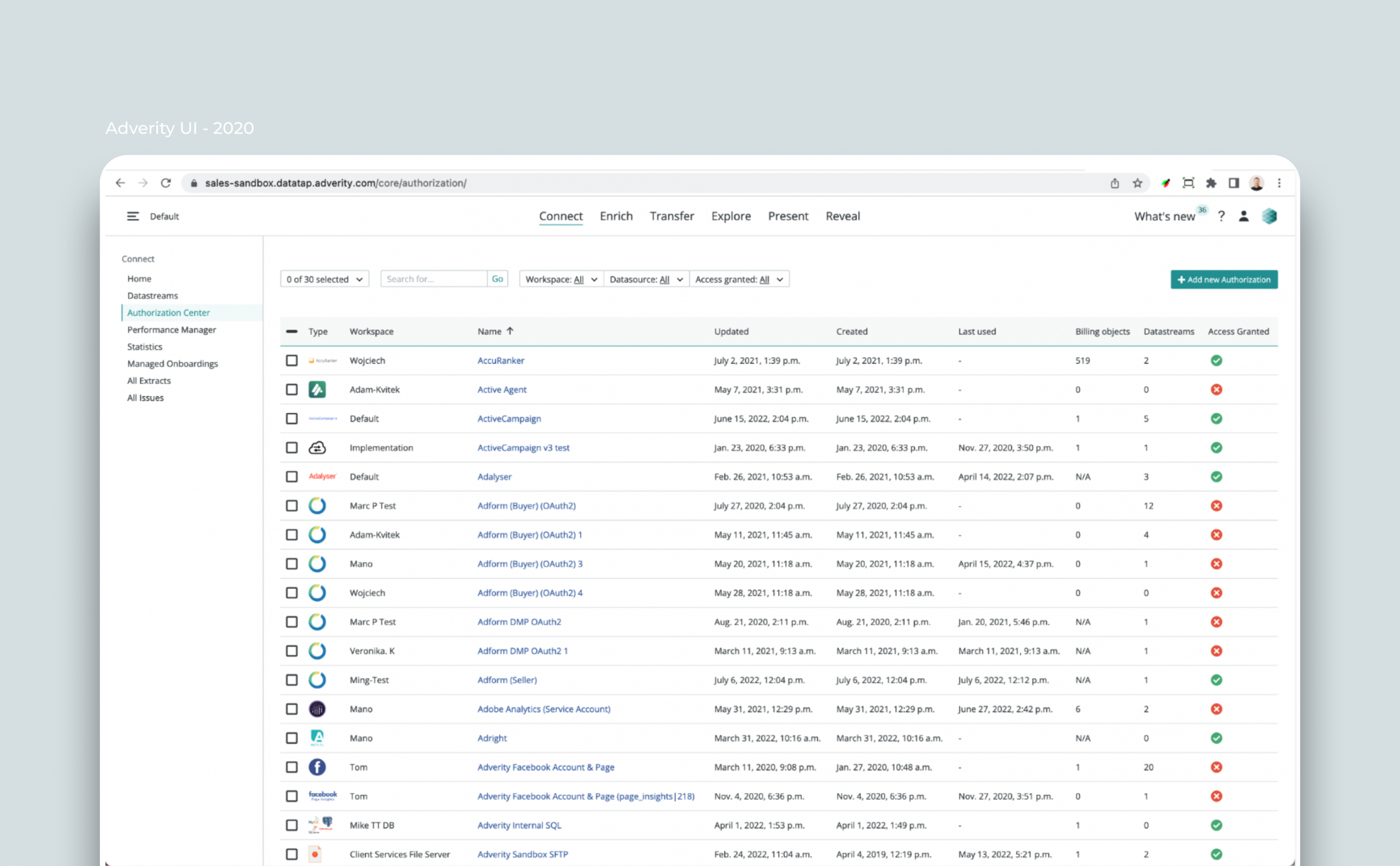
When I joined Adverity, most of the product was legacy software that had evolved through direct implementation by engineers.
The experience had become increasingly complex and inconsistent, with:
As the product grew, these issues increasingly affected usability, learnability and the ability to evolve the experience consistently.
I started by establishing the foundations of a dedicated UX practice.
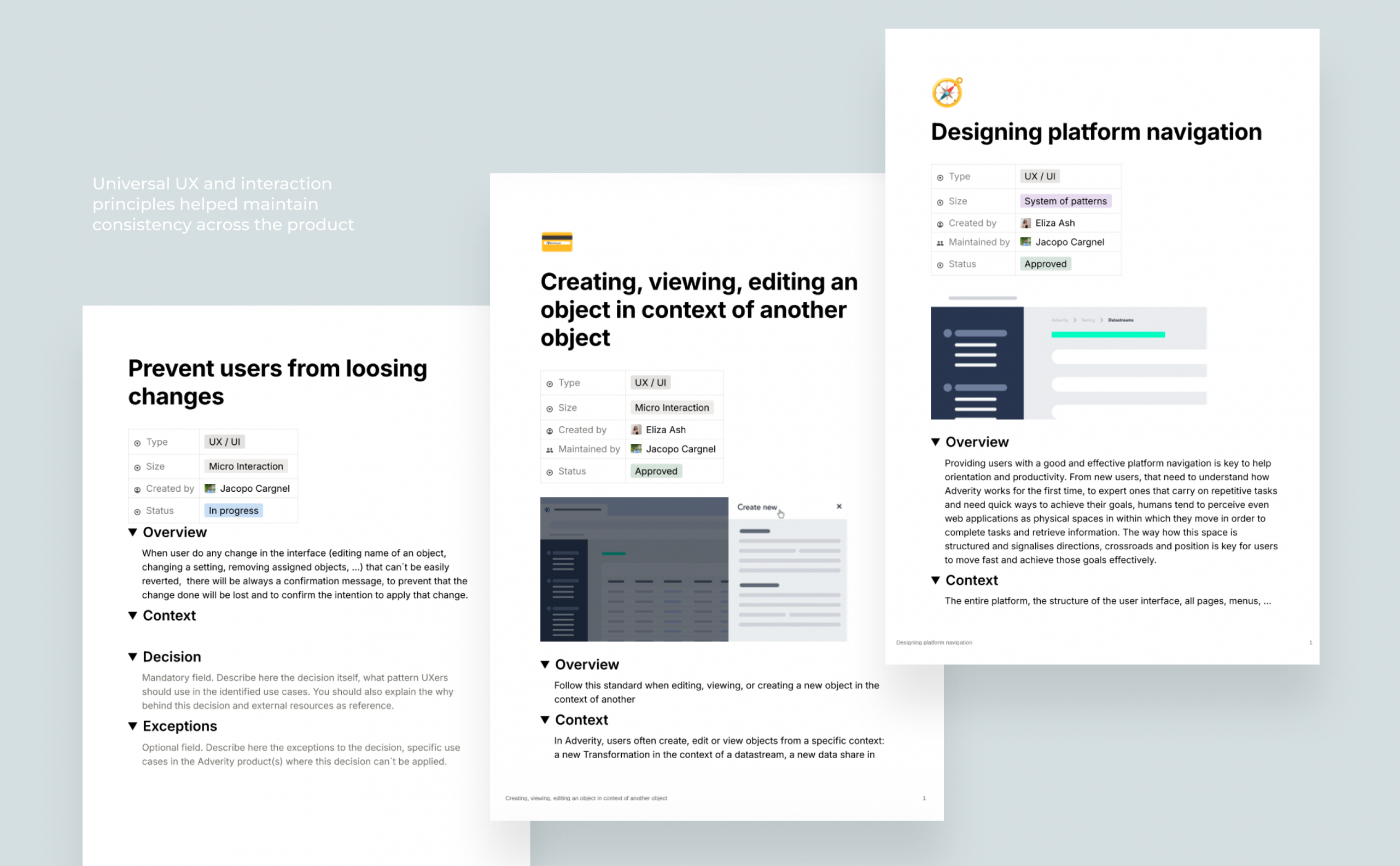
This included defining UX and interaction principles, introducing processes that allowed design to integrate more effectively with product development, and establishing a more structured approach to evaluating and improving the experience.
Together with my team, we conducted usability analyses based on established heuristics, UX expertise and recurring user needs.
This allowed us to identify systemic usability issues rather than treating individual screens or components in isolation.
At the same time, we evolved the Design System from a primarily code-oriented library into a broader product design framework.
Instead of endlessly iterating on rigid components, we shifted the focus towards meaningful patterns based on real use cases and user needs.
One of the major areas we addressed was the product’s information architecture and navigation.
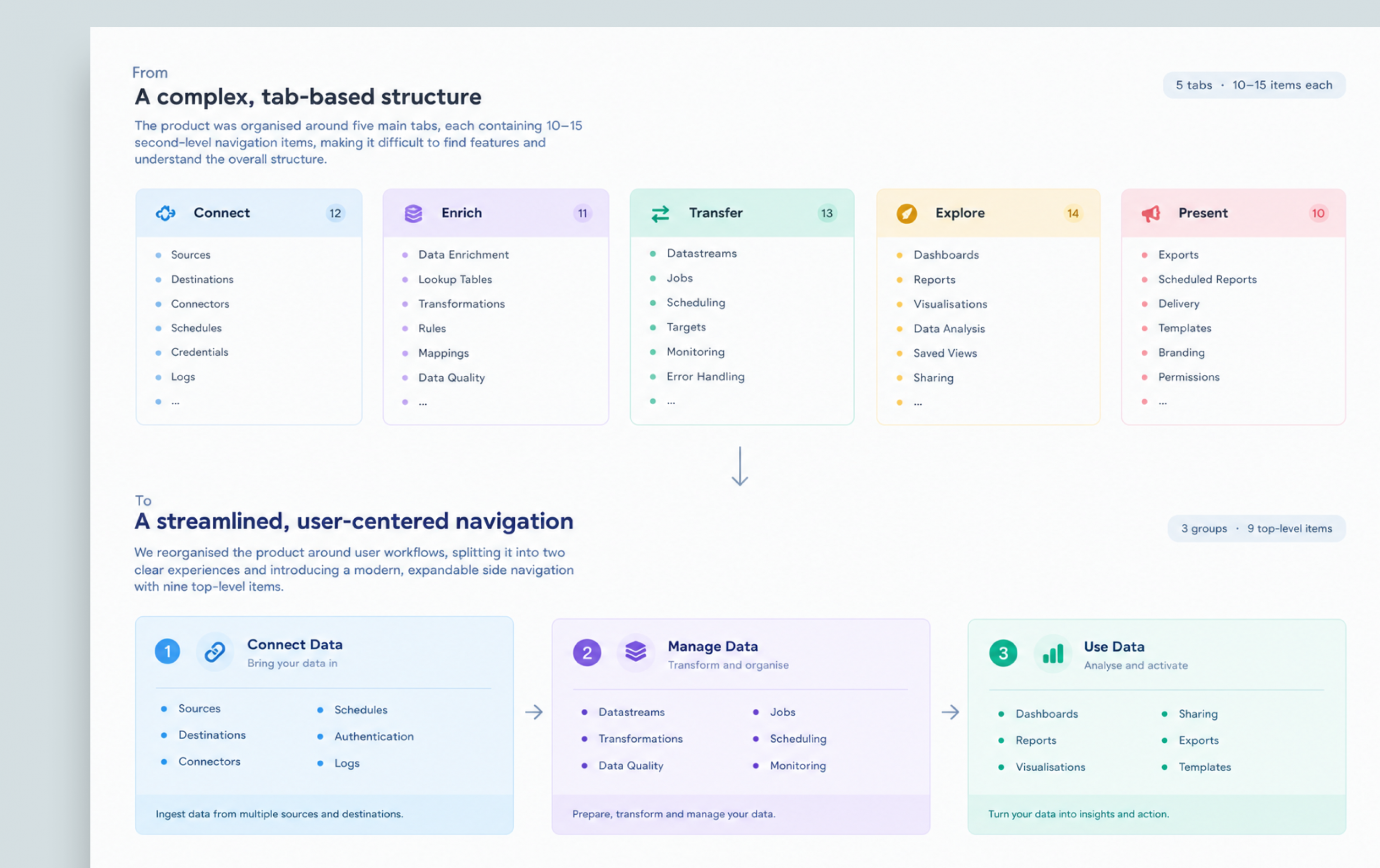
The previous structure was based on five main tabs, each containing around 10–15 second-level navigation items. As the product expanded, this increasingly made it difficult for users to understand where they were and where to find specific functionality.
We redesigned the structure around the logical workflows users actually followed.
The product was split into two distinct experiences and we introduced a modern, expandable side navigation with only nine top-level items.
The new structure provided:
This became one of the foundations for the subsequent evolution of the platform experience.
The UX framework continued to evolve alongside the product.
Designers progressively contributed new principles, documented decisions around recurring interaction patterns and maintained the Design System.
The goal was not simply to create a library of UI components, but to establish a shared language for designing the product.
This helped teams make more consistent decisions and reduced the need to solve the same interaction problems repeatedly across different areas of the platform.
As part of the broader UX evolution, I also identified product language as an important part of the experience.
I introduced a UX Writer into the team and established collaboration between writing, design and engineering.
The UX Writer helped train designers and engineers to make the language used throughout the product:
This extended the UX practice beyond visual and interaction design into the content users rely on to understand and operate the product.
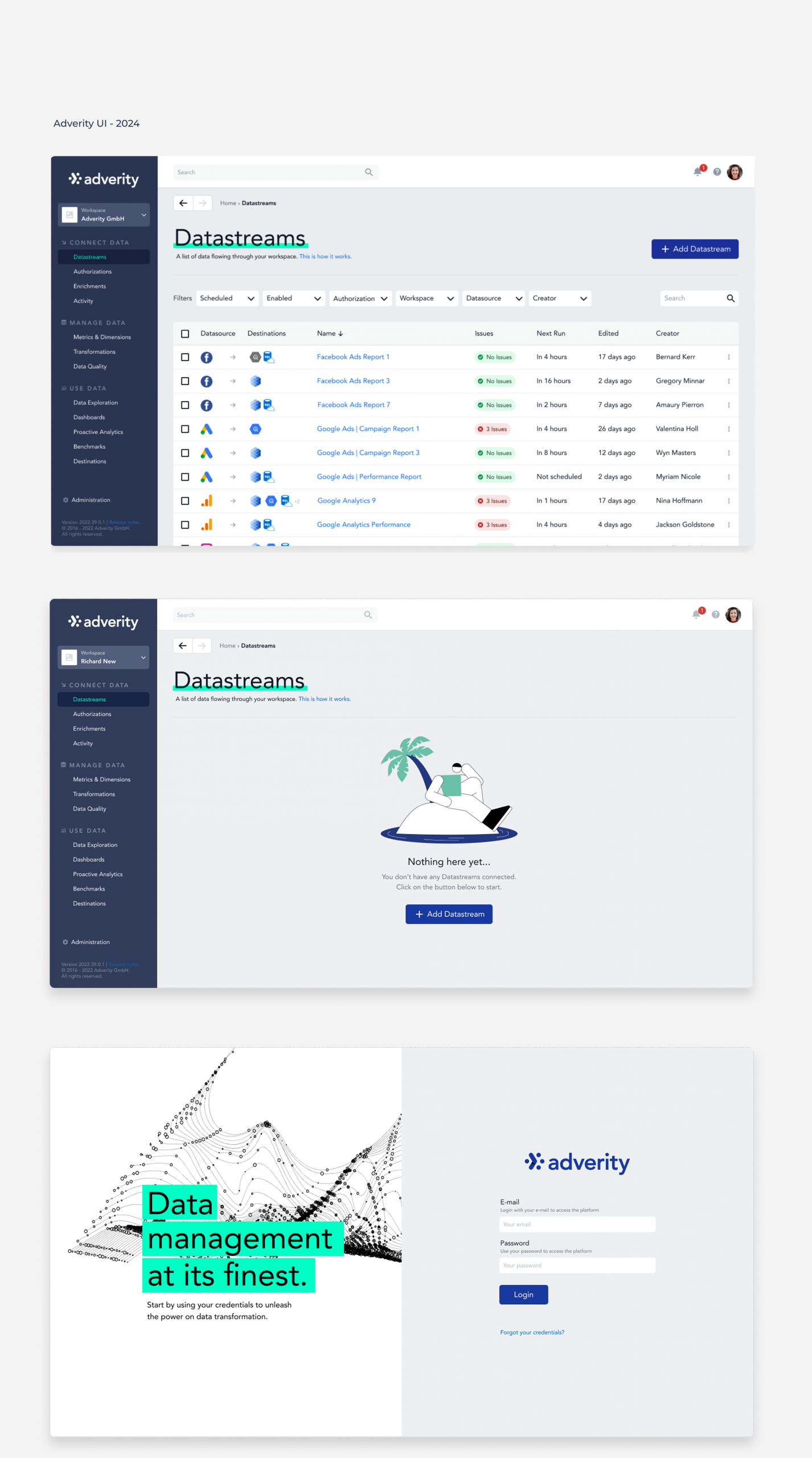
In 2023, Adverity went through a company rebrand.
This created an opportunity to rethink the visual language of the product rather than simply applying the new brand identity to the existing UI.
Together with my team, we completely redesigned the platform’s visual style, evolving typography, colour, visual hierarchy and UI styling to create a more modern and coherent experience.
The visual redesign was supported by the continued evolution of the Design System, allowing the new language to be applied consistently across the product.
As the leader of the UX function, I:
Established Adverity’s UX function and design foundations
Introduced structured usability evaluation
Reframed navigation around users’ actual workflows
Evolved the Design System into a broader product design framework
Established principles and documented recurring interaction patterns
Added UX Writing as a dedicated capability
Led the platform’s visual modernisation following the 2023 rebrand
Created the foundations for a more coherent and scalable product experience
Adverity GmbH
2020-2023
UX Manager